
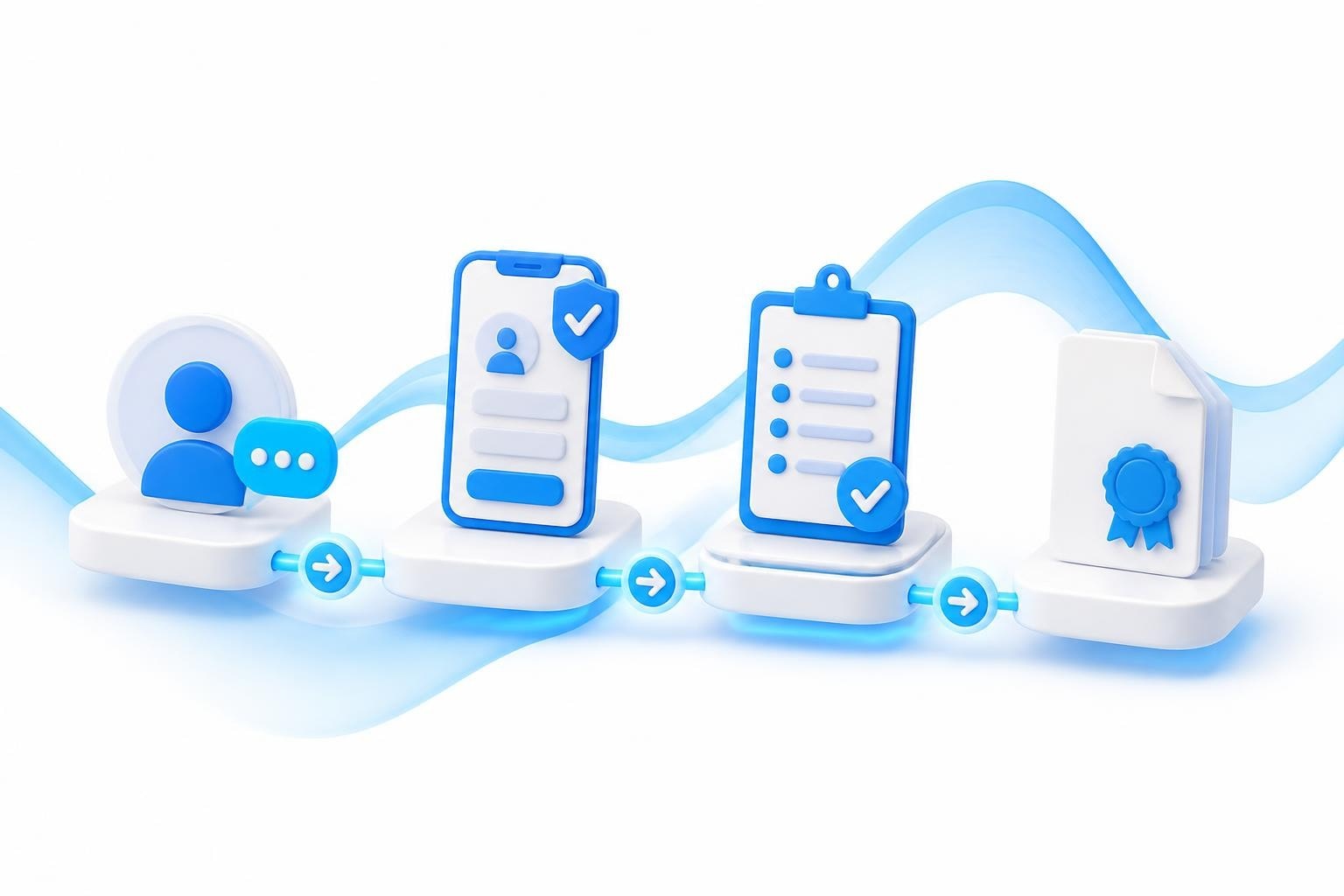
Recruiting and onboarding new creators is the lifeblood of any OFM agency. In 2026, the difference between agencies stuck at ten models and those scaling past fifty often comes down to a single mechanism: how quickly you move interested prospects from initial contact to signed contract. Lead links are the digital pathway that connects your agency's outreach efforts directly to an organized, trackable application process. Instead of juggling Instagram DMs, email threads, and spreadsheets, lead links create a controlled entry point where every prospect submits their information in a standardized format.
What Are Lead Links in Creator Agency Operations
Lead links are unique URLs that direct potential creators to a structured application or inquiry form. When an agency manager shares a lead link through direct messages, influencer outreach, or paid advertising, the recipient lands on a purpose-built page designed to capture essential information, verify eligibility, and initiate the onboarding process.
The Core Components of an Effective Lead Link
Every functional lead link in the creator agency space needs to accomplish three objectives: identify the prospect, pre-qualify their suitability, and create a trackable record in your system. These aren't generic contact forms. They're the first step in a compliance-driven, revenue-generating workflow.
- Unique tracking identifiers that attribute leads to specific team members, campaigns, or referral sources
- Mandatory fields for legal name, age verification, social media handles, and current platform statistics
- Consent checkboxes for GDPR compliance, terms of service, and initial data processing agreements
- Automated routing that moves qualified applications into your onboarding pipeline
When someone clicks a lead link, your system should immediately know who sent it, when it was accessed, and which campaign or recruiter gets credit. This attribution becomes critical when you're managing a team of talent scouts or running multiple acquisition channels simultaneously.
Why Traditional Methods Fail at Scale
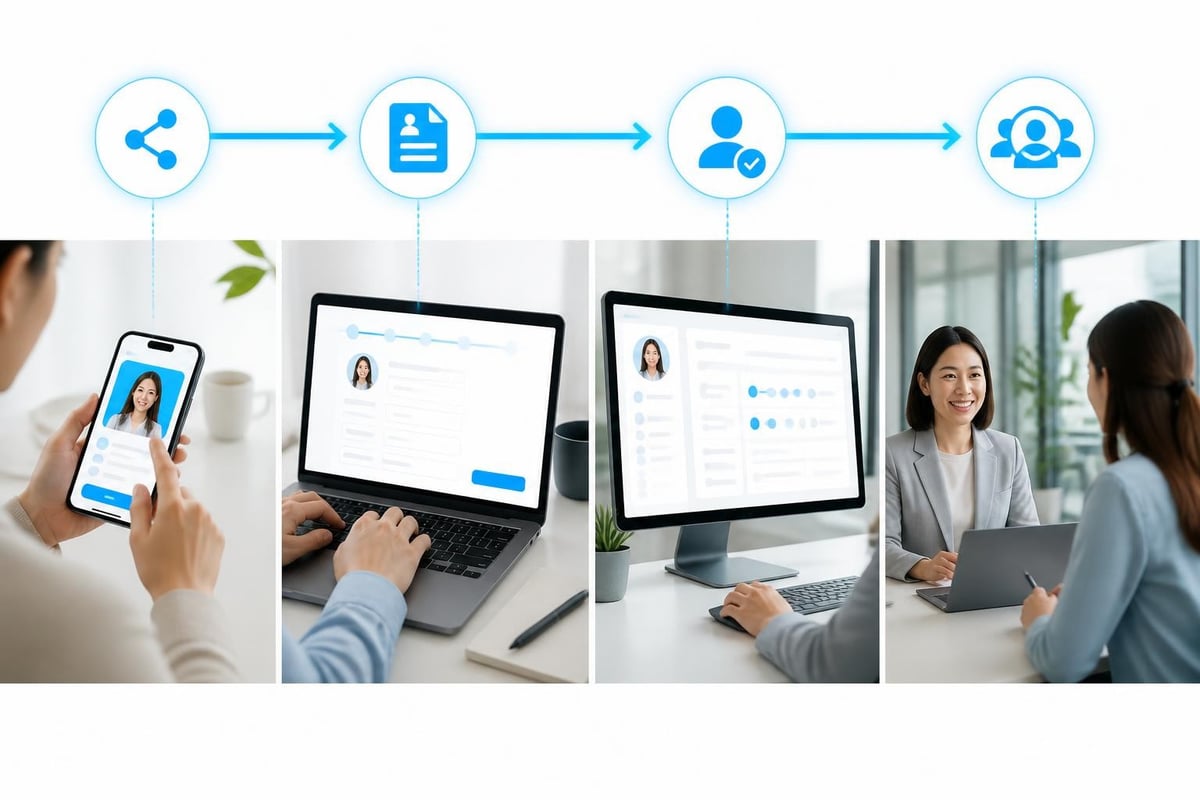
Most agencies start by collecting leads through direct messages and manual data entry. A recruiter finds a promising creator on Instagram, starts a conversation, asks for stats, requests photos, and eventually tries to move them to email or WhatsApp to "talk properly." This approach breaks down the moment you hire your second recruiter or try to manage more than fifteen active conversations.
The Hidden Costs of Manual Lead Collection
| Problem | Impact | Solution with Lead Links |
|---|---|---|
| Lost context | 40% of conversations stall when different team members take over | Centralized application data accessible to entire team |
| Duplicate outreach | Multiple recruiters contact same prospect, damaging brand perception | System flags existing applications before outreach |
| No accountability | Impossible to measure which recruiters or channels produce results | Attribution tracking built into each unique URL |
| Compliance gaps | Missing ID verification, age checks, or consent documentation | Required fields enforce compliance before model enters pipeline |
The manual approach also creates what we call "recruiter hoarding" where individual team members keep their own lists, use personal accounts, and create information silos. When that recruiter leaves or gets promoted, their entire pipeline walks out the door with them.
Building Lead Links That Convert
The structure of your lead link determines conversion rates just as much as the quality of the traffic you're sending to it. A poorly designed application page can lose 60-70% of interested prospects before they submit.
Optimizing Application Page Design
Keep the initial form short. You need enough information to make a yes/no decision, but asking for fifteen fields up front kills completion rates. Start with:
- Legal first and last name (exactly as it appears on government ID)
- Date of birth with clear formatting instructions
- Primary platform handles (Instagram, TikTok, or existing creator accounts)
- Current follower count or monthly earnings if already creating content
- Preferred contact method (email, Telegram, WhatsApp)
Everything else can wait until after the initial screening call. Your lead links should get prospects into your system, not complete the entire onboarding process. The goal is to transform an invisible Instagram user into a trackable record with a name, contact method, and qualification status.
Many agencies implementing portal leads find that conversion rates jump 40% when they reduce initial form fields from twelve to five. The psychological difference between "quick application" and "extensive questionnaire" determines whether someone completes the process or closes the tab.
Mobile Optimization Isn't Optional
In 2026, 89% of creator applications come from mobile devices. If your lead link sends prospects to a desktop-optimized page with tiny input fields and poorly formatted checkboxes, you're throwing away half your traffic.
Test every lead link on an actual phone before distributing it. Form fields should be large enough to tap accurately, error messages should display clearly above the keyboard, and the submit button should remain visible without scrolling. Auto-capitalization and input type optimization matter more than visual design. Setting email fields to type="email" triggers the appropriate keyboard, date fields should use native pickers, and phone number inputs should only accept digits.
Attribution and Team Management
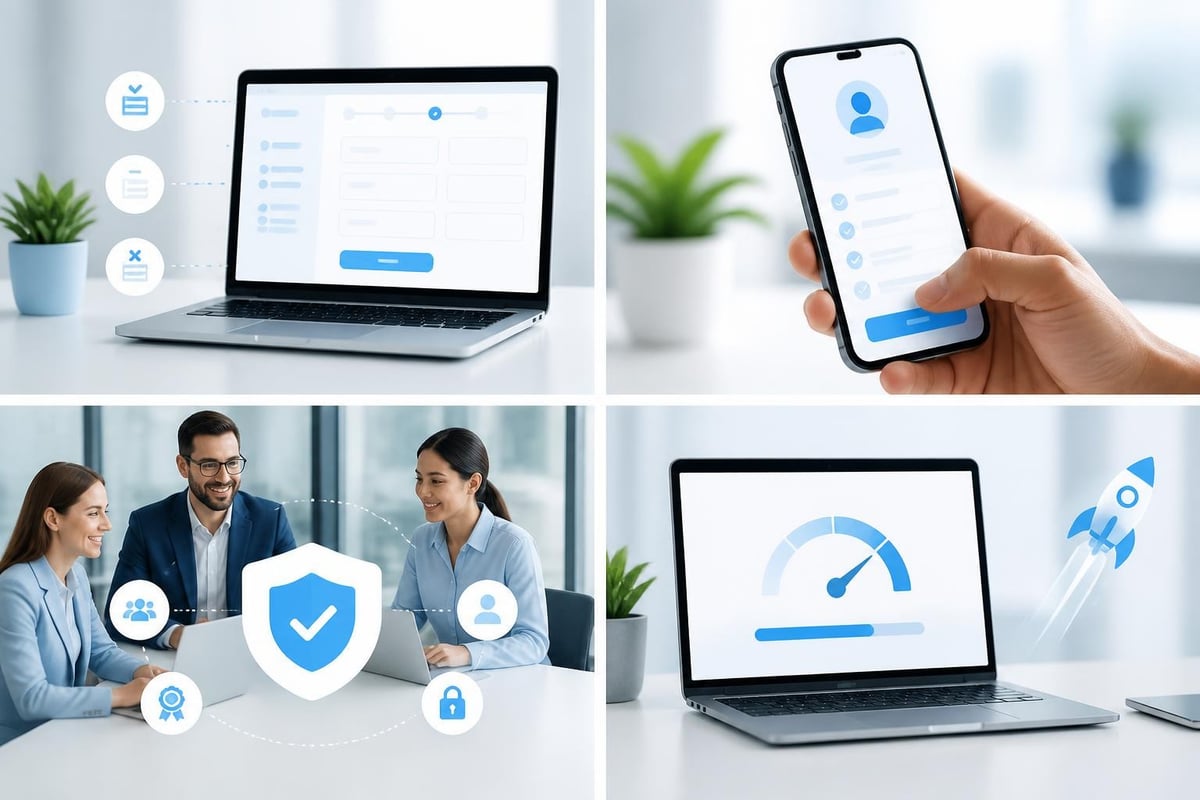
When you're running a creator agency with multiple recruiters, paid ads, influencer partnerships, and organic social channels, you need to know which sources produce the highest quality models. Lead links make this possible through URL parameters and tracking codes.
Setting Up Source Attribution
Generate unique lead links for each acquisition channel:
- Individual recruiter links (recruiter-sarah.apply, recruiter-james.apply) to measure team performance
- Campaign-specific links for paid advertising across TikTok ads, Instagram promotions, or Google campaigns
- Referral links when existing models recommend friends or share on their personal accounts
- Event or partnership links for collaborations with other agencies, industry events, or guest appearances
The technical implementation is straightforward. Each link includes a URL parameter (?source=recruiter-sarah or ?campaign=tiktok-march-2026) that your system captures and stores with the application record. This creates an unbreakable connection between the lead source and every downstream outcome: conversion to signed model, first month revenue, retention past six months, and lifetime value.
Modern agency systems can generate thousands of unique lead links automatically, each tied to specific team members or campaigns, without requiring manual URL construction or spreadsheet tracking.
Compliance Integration from First Contact
Age verification, identity confirmation, and consent documentation aren't steps you can defer until later. In 2026, the regulatory environment around creator platforms demands that compliance begins at the application stage, not after someone's already producing content.
Required Compliance Checkpoints
Your lead links should trigger immediate compliance workflows:
- Age gate that blocks applications from anyone indicating they're under 18
- Clear disclosure of how application data will be used, stored, and processed
- Preliminary consent to background checks, identity verification, and platform terms of service
- Geographic restrictions if your agency doesn't operate in certain jurisdictions
These aren't obstacles designed to reduce applications. They're protective measures that prevent your agency from investing time in prospects who can't legally work with you. Finding out someone's seventeen after three weeks of onboarding conversations is worse than losing that lead at the application stage.
Agencies that integrate compliance into their lead links report 35% fewer onboarding failures and significantly reduced legal exposure. When every application includes verified age, documented consent, and clear understanding of requirements, your conversion-to-signed-model rate improves because you're only progressing qualified candidates.
For a comprehensive understanding of documentation requirements, review the OnlyFans agency compliance checklist to ensure your lead links capture all necessary consent and verification steps.
Automation After Application Submission
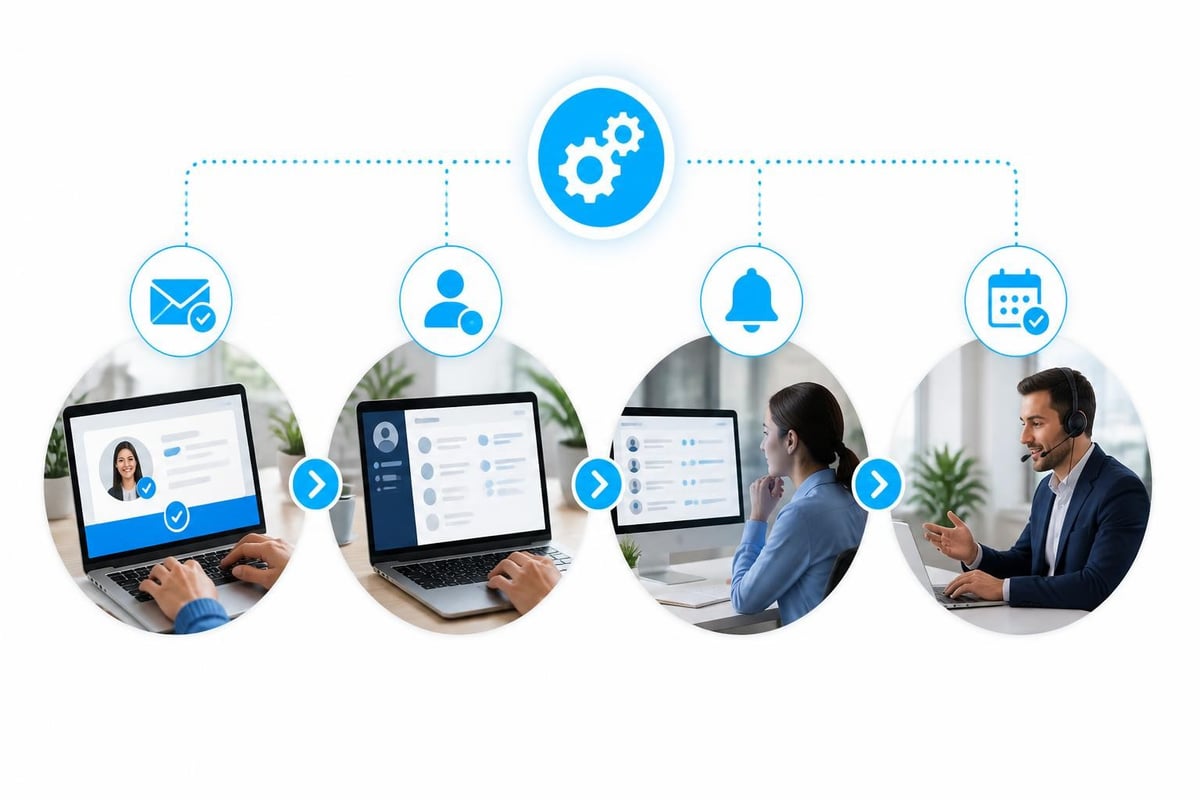
The moment someone submits an application through your lead link, three things should happen automatically: record creation in your CRM, notification to the assigned recruiter, and delivery of a confirmation message to the applicant. Manual next steps introduce delays that kill momentum and reduce conversion rates.
Building the Post-Application Sequence
Most prospects who complete an application expect immediate acknowledgment. Waiting 24-48 hours to respond increases the likelihood they'll apply to competing agencies or lose interest entirely.
- Instant confirmation email or SMS thanking them for applying and setting expectations for next steps
- Internal notification to the recruiter or team member assigned to that traffic source
- CRM record creation with all application data, source attribution, and submission timestamp
- Automated qualification based on follower counts, platform presence, or other screening criteria
- Calendar link for qualified applicants to book their own screening call without back-and-forth messaging
This sequence transforms a static application form into an active recruitment pipeline. The prospect feels acknowledged, your team knows exactly who needs follow-up, and qualified leads can self-schedule the next conversation without coordinator involvement.
Measuring Lead Link Performance
Creating lead links is step one. Optimizing them based on actual performance data separates agencies that plateau from those that scale. Every lead link should generate measurable metrics that inform your recruitment strategy.
Key Metrics to Track
| Metric | What It Reveals | Action Threshold |
|---|---|---|
| Click-to-submit rate | How many people who access the link actually complete the application | Below 40% indicates form friction or poor mobile experience |
| Source quality score | Which channels produce models that sign contracts and generate revenue | Shift budget toward channels with quality scores above 7/10 |
| Time to first response | How quickly your team contacts new applicants after submission | Target under 2 hours during business hours |
| Application-to-signed rate | Conversion from submitted application to executed contract | Industry benchmark is 15-25% for qualified traffic |
| Cost per signed model | Total acquisition spend divided by models who complete onboarding | Should remain below 25% of expected first-year commission revenue |
If your TikTok ad lead links generate 200 applications monthly but only three signed models, while your Instagram recruiter links produce 40 applications and twelve signed models, the data tells you where to allocate resources. Raw application volume means nothing if conversion quality is low.
The most sophisticated agencies in 2026 are implementing live screen dashboards that display real-time lead link performance, allowing managers to identify problems and adjust campaigns within hours instead of weeks.
Lead Links Across Different Recruitment Channels
The optimal lead link strategy varies depending on how you're acquiring traffic. A link shared in Instagram DMs requires different setup than one used in Facebook ads or influencer referral programs.
Channel-Specific Optimization
Paid advertising links need aggressive pre-qualification because you're paying for every click. Include more screening questions up front to filter out unqualified traffic before it consumes your recruiters' time.
Recruiter direct outreach links should be streamlined since the recruiter has already had initial conversation and pre-qualified the prospect. The lead link in this context serves to formalize information you've already discussed.
Referral program links shared by existing models need clear disclosure that the referrer may receive compensation. Transparency about referral incentives is both an ethical requirement and, in many jurisdictions, a legal one.
Organic social links posted on your agency's public accounts need to be broadly accessible and mobile-optimized since you have no control over device type or user intent.
For agencies looking to systematize their recruitment operations, implementing a comprehensive leads system ensures that lead links from all channels feed into a unified pipeline with consistent tracking and follow-up processes.
Integrating Lead Links with Onboarding Workflows
The application is just the beginning. Your lead links need to connect seamlessly with the rest of your onboarding process to prevent prospects from falling through gaps between systems.
Creating a Continuous Pipeline
When someone submits an application through a lead link, that data should flow directly into your onboarding workflow without manual transfer or re-entry. Modern operating systems built for creator agencies automatically:
- Populate contract templates with legal names, addresses, and contact information from the application
- Generate secure document signing links that continue the digital workflow
- Schedule compliance tasks like ID verification, age checks, and background screening
- Create model profiles in your management dashboard before they've even signed
- Trigger payment setup instructions so banking information is collected during onboarding
This continuity eliminates the administrative burden that bogs down agencies trying to scale. Your team shouldn't be copying information from application forms into contract documents, then re-entering the same data into accounting systems, and again into project management tools.
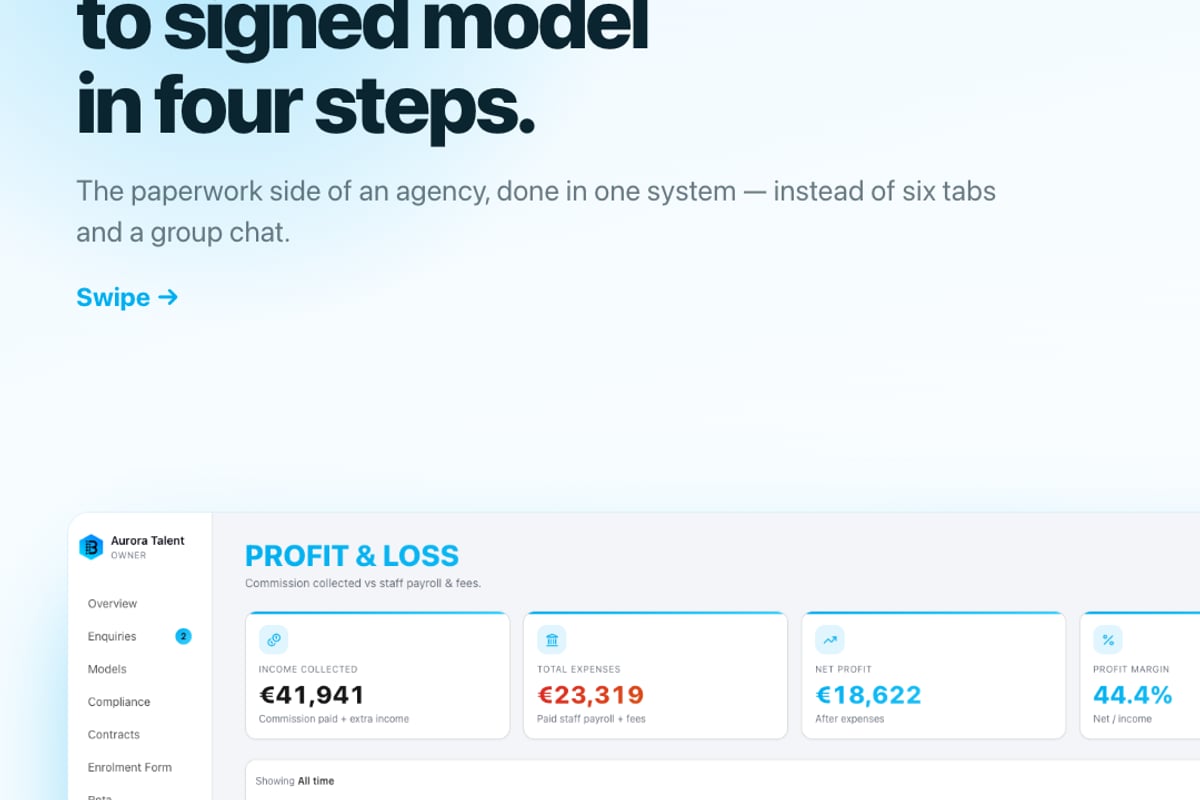
BIGROS was specifically designed to solve this exact problem. When a prospect completes an application through a lead link, the Creator Agency Operating System automatically creates their profile, tracks them through onboarding stages, and surfaces any compliance gaps that need resolution before they can start earning. Your recruiters focus on conversations and relationship-building while the system handles data flow and process enforcement.
Security and Data Protection
Every lead link you distribute creates a potential entry point for spam, competitors harvesting information, or malicious actors. Basic security measures protect both your agency and the prospects entering your pipeline.
Protecting Your Lead Link Infrastructure
Implement these safeguards:
- CAPTCHA or bot detection on all application forms to prevent automated submissions
- Rate limiting that restricts the number of submissions from a single IP address
- HTTPS encryption for all pages that collect personal information
- Data retention policies that automatically purge declined or abandoned applications after 90 days
- Access controls ensuring only authorized team members can view application details
Remember that application data includes legal names, dates of birth, contact information, and sometimes social security numbers or financial details. A data breach at the application stage is just as damaging as one that affects active models. Your lead links are collecting sensitive information that requires the same protection standards you'd apply to signed contracts or payment systems.
FAQ About Lead Links
How many lead links should an agency create?
Start with unique links for each recruiter and each major traffic source (paid ads, organic social, referrals). Most agencies between 10-50 models operate with 15-30 active lead links. Beyond that, you're creating more granularity than most teams can meaningfully analyze.
What happens when someone submits the same lead link twice?
Your system should detect duplicate applications based on email address or phone number and either merge the submissions or alert the assigned recruiter. Multiple applications from the same person usually indicate they forgot they already applied or they're shopping around and comparing agency responses.
Should lead links expire or remain active indefinitely?
Campaign-specific links for limited-time promotions should expire, but core recruiter links and general application links should remain active. You never know when someone will click a six-month-old link from a saved message or email.
How do we prevent competitors from accessing our lead links?
You can't completely prevent competitors from seeing your application pages, but you can implement honeypot fields that detect non-human submissions and require email verification before applications enter your active pipeline. Focus less on secrecy and more on having a better, faster follow-up process than competitors.
What's the ideal length for a creator application form?
Five to seven fields for initial submission. You can always collect additional information during the screening call or through follow-up forms. Every additional field you require up front reduces completion rates by an average of 8-12%.
Advanced Lead Link Strategies
Once your basic lead link infrastructure is operating smoothly, several advanced tactics can improve both volume and quality of applications.
Dynamic Content and Personalization
Modern lead link systems can display different content based on the traffic source. Someone arriving from a TikTok ad sees messaging and images relevant to TikTok creators, while someone clicking a link in a recruiter's Instagram DM sees personalized text mentioning the recruiter by name. This contextual customization increases trust and improves conversion rates by 25-40%.
Multi-Step Progressive Profiling
Instead of asking for all information at once, progressive forms collect basic details first, then expand to request additional information only after the initial submission. The psychological trick is that people who've already invested time in step one are far more likely to complete step two than they would have been to fill out a longer single form.
Retargeting Abandoned Applications
If someone accesses your lead link, begins filling out the form, but abandons before submission, you can capture their partial data (if they've entered an email address) and trigger automated follow-up. A simple "We noticed you started an application but didn't finish. Is there anything we can help with?" message recovers 15-20% of abandoned submissions.
Team Training and Lead Link Best Practices
Your lead links are only as effective as your team's ability to use them properly. Standardize how recruiters share links, follow up on submissions, and track their attribution.
Recruiter Guidelines
- Never modify or customize lead links manually; use the system-generated versions to ensure tracking works
- Include context when sharing links in DMs: "Here's our application page where you can submit your details"
- Set response time expectations so prospects know when to expect follow-up after applying
- Log offline conversations if someone applies after an in-person meeting or phone call
- Verify mobile functionality before distributing new links to your network
The agencies that scale past thirty models all have one thing in common: systematic processes that work the same way regardless of which team member handles each lead. Lead links are the foundation of that systematization.
Lead links transform creator recruitment from chaotic DM threads into a measurable, scalable pipeline that grows with your agency. When every prospect enters your system through a structured application, you gain the attribution data, compliance documentation, and workflow automation necessary to manage fifty models as efficiently as you once managed five. BIGROS handles the entire journey from lead link submission through contract signing, compliance verification, and payment setup, giving you a complete operating system built specifically for the creator agency model.