
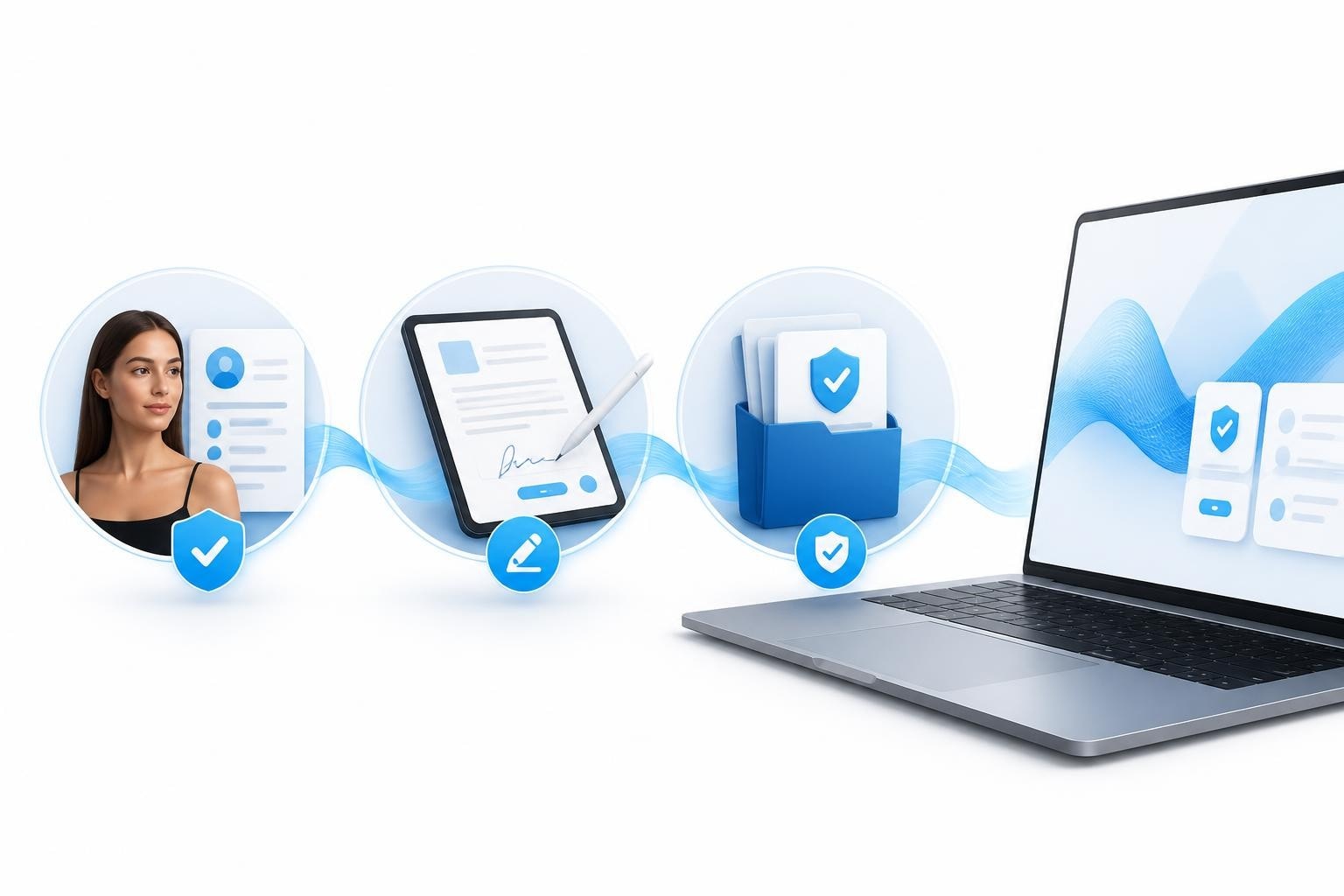
Running a creator agency means onboarding new models constantly, and every new talent requires a signed management contract before they start earning. Paper contracts slow everything down, create filing headaches, and introduce compliance risk when signatures go missing. An e sign contract system solves these problems by letting models review terms, provide consent, and sign digitally from any device. This approach speeds up onboarding, keeps records organized, and ensures you have legally valid agreements on file from day one.
Why Creator Agencies Need Electronic Contract Signing
Traditional paper workflows create bottlenecks when you're scaling past your first 10-15 models. Sending physical contracts via mail takes days, and follow-up becomes a full-time job when models forget to return signed copies. You end up with talent earning revenue before their paperwork is complete, which creates compliance gaps and payout headaches.
Electronic signature systems eliminate these delays entirely. Models receive contract links via email or SMS, review terms on their phone or laptop, and sign within minutes. The signed document lands in your system immediately, timestamped and archived. You can move from first contact to revenue-generating talent in hours instead of weeks.
Legal Validity Under U.S. Law
The E-SIGN Act established that electronic signatures carry the same legal weight as handwritten signatures in 2000. A valid e sign contract requires three core elements: consent to do business electronically, clear intent to sign, and proper record retention. As long as all parties agree to use electronic methods and the system captures their deliberate action to sign, the contract holds up in court.
Most states have also adopted the Uniform Electronic Transactions Act (UETA), which reinforces federal protections. Both laws exclude certain document types like wills and adoption papers, but standard management contracts for creator agencies fall well within the permitted scope. Understanding these legal validity requirements helps you choose compliant tools and design proper workflows.

Setting Up Your E Sign Contract Workflow
A complete workflow connects your lead management, contract generation, signature capture, and compliance storage. When a model accepts your offer, the system should automatically generate their personalized contract, send it for signature, and file the completed document without manual intervention.
Choosing the Right Platform
Select e-signature software that integrates with your existing tools or opt for an all-in-one creator agency operating system that handles contracts alongside other operations. Key features include:
- Template management for standardized contract language
- Variable fields that auto-populate model names, commission rates, and start dates
- Multi-device signing so models can complete forms on mobile or desktop
- Audit trails that timestamp every view, edit, and signature
- Secure storage with encryption and role-based access controls
Many agencies start with standalone e-signature tools, but quickly hit friction when contracts live separately from onboarding workflows, compliance tracking, and payout systems. A unified platform reduces context-switching and ensures contract data flows into downstream processes automatically.
Building Compliant Contract Templates
Your template should clearly state terms while remaining legally enforceable. Work with legal counsel to draft standard language covering commission structure, exclusivity terms, content ownership, termination conditions, and dispute resolution. Once approved, lock the template to prevent unauthorized changes.
Essential template elements:
- Commission rates and payment schedules
- Exclusivity or non-exclusivity clauses
- Content rights and usage permissions
- Confidentiality and NDA provisions
- Termination notice periods
- Dispute resolution mechanisms
Build variable fields for information that changes per model: legal name, stage name, social media handles, and start date. This standardization ensures every contract includes required clauses while personalizing the details. When you need to update terms agency-wide, you modify one template instead of hundreds of individual files.
Onboarding Models with Electronic Signatures
Speed matters during onboarding. Models are excited to start when they first agree to work with you, but enthusiasm fades if paperwork drags on. A streamlined e sign contract process capitalizes on that initial momentum and gets talent earning faster.
Step-by-Step Signing Process
- Generate contract from your approved template with model-specific details pre-filled
- Send via email or SMS with a clear subject line like "Your Management Contract - Sign to Start"
- Model reviews terms on any device, with the option to download a copy
- Signature capture via typed name, uploaded image, or touchscreen drawing
- Automatic filing into your compliance system with timestamp and IP address logged
The entire process should take 5-10 minutes from the model's perspective. Make sure the signing interface is mobile-friendly since most models will complete this step on their phone. Provide a progress indicator so they know how many pages or sections remain.
Tracking Signature Status
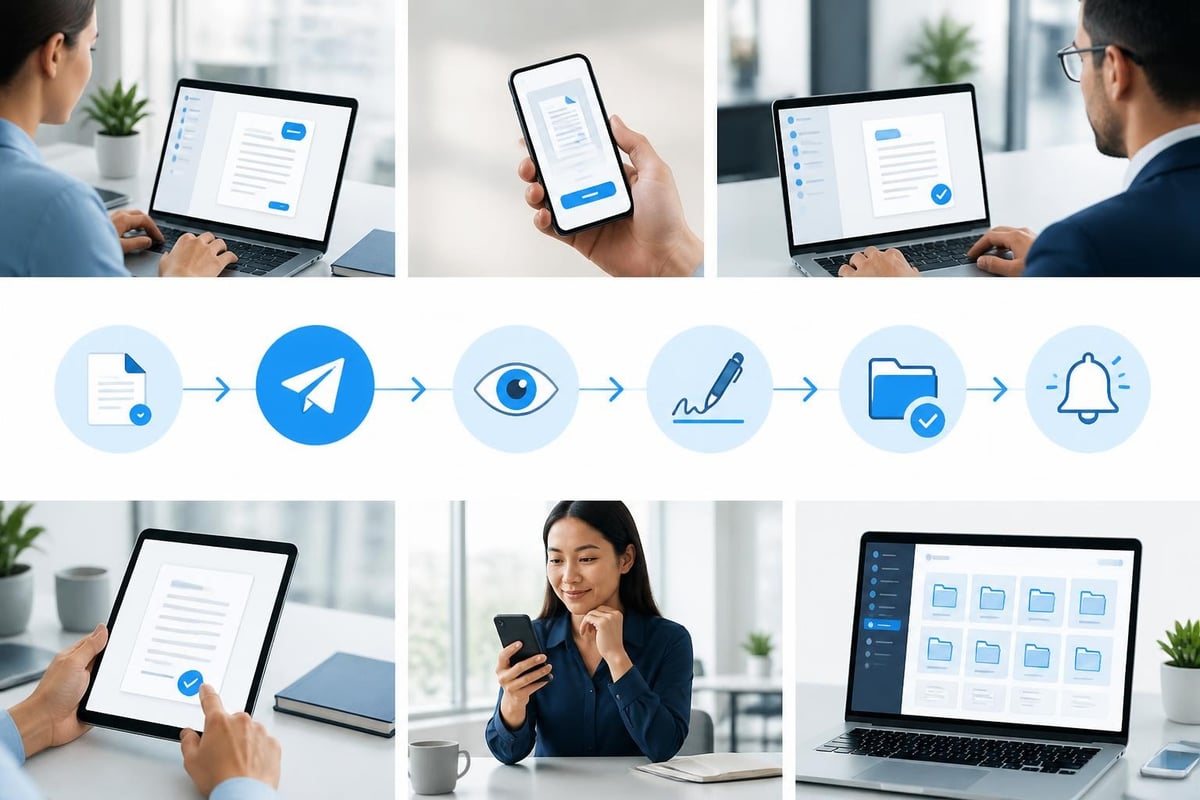
Dashboard visibility prevents contracts from falling through the cracks. You need real-time status for every agreement: sent, viewed, signed, or expired. Automated reminders should nudge models who haven't signed within 24-48 hours, with escalating follow-up if they still haven't completed the contract after 72 hours.
| Status | Action Required | Automation Trigger |
|---|---|---|
| Sent | Monitor for opening | Reminder at 24 hours |
| Viewed | Follow up if not signed | Reminder at 48 hours |
| Signed | File and begin onboarding | Welcome email + system access |
| Expired | Resend with new link | Alert to account manager |
This tracking becomes critical when you're managing 20+ models simultaneously. Without it, you rely on memory or spreadsheets, which inevitably leads to missed signatures and compliance gaps. Your compliance portal should surface unsigned contracts prominently so managers can take action before models start creating content.
Compliance and Record-Keeping Requirements
Signed contracts only protect you if you can produce them when needed. Tax audits, payment disputes, or model departures all require immediate access to historical agreements. Your e sign contract system must maintain tamper-proof records with complete audit trails.
What to Store and How Long
Keep every version of every contract indefinitely. Storage is cheap, and you never know when you'll need to reference a three-year-old agreement during a dispute. Beyond the signed PDF, maintain metadata including:
- Signer IP address and device type
- Timestamp for each action (sent, viewed, signed)
- Email delivery and open confirmations
- Any attached documents or addendums
- Version history if the contract was amended
Most jurisdictions require businesses to retain contracts for at least seven years for tax purposes. Creator agencies should plan for longer retention given the ongoing nature of content licensing and revenue sharing. Organize files by model and date, with search functionality that lets you retrieve specific contracts in seconds.
Access Controls and Security
Contracts contain sensitive personal information: legal names, addresses, Social Security numbers, and banking details. Implement role-based access so only authorized staff can view complete files. Your chatters don't need access to model contracts, while your compliance officer needs full visibility.
Security best practices:
- Encrypt files at rest and in transit
- Enable two-factor authentication for all users
- Log every file access with user identity and timestamp
- Restrict download and printing capabilities
- Conduct quarterly access reviews to remove inactive users
A breach of contract data creates legal liability and destroys trust with your talent roster. The tools you choose should offer enterprise-grade security even if you're a small operation. Many agencies mistakenly treat contracts as low-priority documents, but they're actually your most important legal protection.
Common Mistakes and How to Avoid Them
Even experienced agencies make errors that undermine their e sign contract implementation. These mistakes create legal risk, slow onboarding, or frustrate models during their first interaction with your systems.
Vague Signature Requirements
Don't assume models understand what constitutes a valid signature. Some platforms accept typed names, while others require drawn signatures or uploaded images. Specify the acceptable methods clearly and provide visual examples. A model who submits an invalid signature wastes everyone's time when you have to circle back for a proper one.
Missing Consent Disclosures
Federal law requires that signers explicitly consent to electronic contracts. Include a checkbox or standalone page where models acknowledge they agree to conduct business electronically and understand how to access signed documents later. This consent must occur before they sign, not buried in fine print afterward.
Inconsistent Contract Versions
Using multiple contract templates for similar situations creates confusion and compliance headaches. One model might have a 30-day termination clause while another has 60 days, not because their situations differ but because you used an outdated template. Maintain a single source of truth and version your templates clearly (v1.0, v1.1, v2.0) so you can track which terms were in effect when.
No Offline Backup Plan
Technology fails. Have a manual process ready for situations where a model can't access the electronic system. This might mean a printable PDF they can sign and scan back, or a DocuSign alternative if your primary platform goes down. Document this backup procedure so any team member can execute it during an emergency.
Integrating Contracts with Broader Operations
An e sign contract doesn't exist in isolation. The data it contains should flow into your accounting, compliance, and model management systems automatically. Manual re-entry of contract terms into spreadsheets defeats the purpose of digital workflows.
Connecting Signatures to Onboarding
Once a model signs their contract, several actions should trigger automatically:
- Create their profile in your model management system
- Grant access to your content planning tools
- Schedule their first check-in call with their account manager
- Send welcome materials and brand guidelines
- Begin tracking their onboarding progress
This automation ensures nothing falls through the cracks during the critical first week. Models feel supported and organized, while your team spends less time on administrative tasks. The signature itself becomes the trigger that sets everything else in motion.
Payroll and Commission Tracking
Your payout system needs to know each model's commission rate, payment schedule, and bank details. All of this information should flow directly from the signed contract into your financial system. When it's time to pay OnlyFans creators, the system already has their rate on file and can calculate earnings automatically.
Discrepancies between contract terms and actual payments are a common source of model complaints. Eliminate this risk by making the contract the single source of truth. If you negotiate a new commission rate, execute an addendum through the same e sign contract workflow, which updates the payout system in real time.

Frequently Asked Questions
Can models sign contracts on their phones?
Yes, and most will. Modern e-signature platforms are fully mobile-responsive, allowing models to review multi-page contracts, scroll through terms, and provide signatures using touchscreen drawing or typed names. The process works on any device with internet access, from smartphones to tablets to desktop computers. Ensure your contract templates display properly on small screens with readable font sizes and proper spacing.
What happens if a model claims they didn't sign?
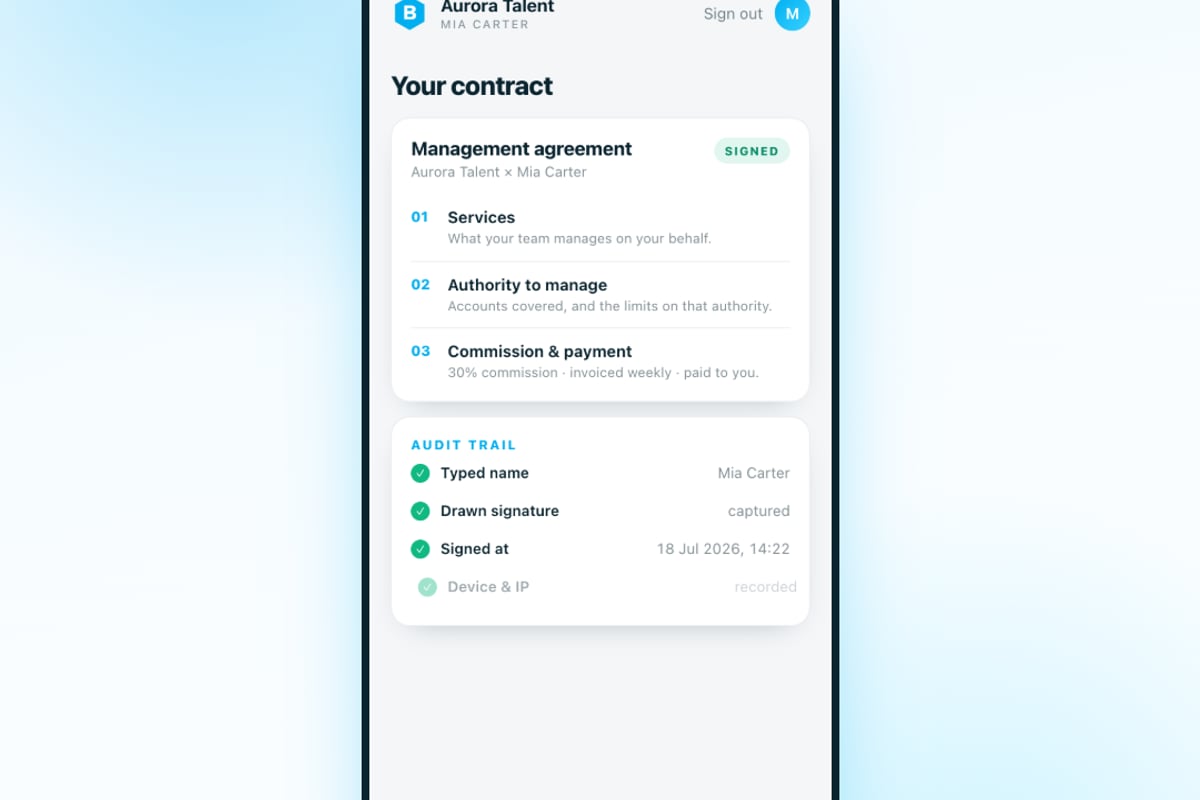
A proper e sign contract system captures an audit trail that proves signature authenticity. This includes the signer's IP address, device type, email verification, timestamps for each action, and often identity verification steps like SMS codes. Courts generally uphold electronic signatures when these records demonstrate the signer's clear intent to be bound by the agreement. Your system should retain this metadata permanently alongside the signed document itself.
Do we need separate contracts for different model types?
Most agencies benefit from contract templates tailored to different engagement models. Exclusive models need different terms than non-exclusive talent. Creators who produce custom content require clauses that models focused on mass-market content don't. Build 3-5 standardized templates that cover your common scenarios, then use variable fields to personalize within each category. This approach balances consistency with necessary flexibility.
E-Signature Tools vs. Integrated Platforms
Standalone e-signature software like DocuSign or Adobe Sign offers robust signing capabilities, but you'll still need to connect them to your lead tracking, model management, and financial systems. Each integration point creates potential failure modes and requires ongoing maintenance as platforms update their APIs.
Standalone tools excel at:
- Advanced signature options (biometric, blockchain-verified)
- Compliance certifications for regulated industries
- Integration with enterprise tools like Salesforce
Integrated agency platforms win on:
- Zero-friction workflows from lead to signed contract to first payout
- Unified data model eliminating sync issues
- Purpose-built features for creator agency needs
- Lower total cost when replacing multiple point solutions
For agencies managing fewer than 10 models, a standalone e-signature tool combined with spreadsheets might suffice. Once you cross 15-20 models, the operational complexity demands purpose-built software. Managing onboarding, compliance, contracts, and payments across disconnected tools becomes a significant drag on growth.
BIGROS was built specifically to address these pain points, offering contract management alongside lead tracking, compliance workflows, and live financial dashboards. When a model signs their contract through BIGROS, that signature immediately enables their profile, sets their commission rate, and grants them access to content planning tools, no manual steps required.
Scaling Contract Management Past 20 Models
Your first 10 contracts are easy to manage manually. You remember who signed when, can find files quickly, and personally oversee every signature. That personal touch breaks down as your roster grows. You need systems that work without your direct involvement.
Template Variations for Different Scenarios
Create conditional contract templates that adjust based on model characteristics. A new model with no existing audience might receive a standard 50-50 revenue split, while an established creator with 100,000 Instagram followers negotiates 70-30 terms. Your contract system should present the appropriate template automatically based on data entered during lead qualification.
This prevents the embarrassing situation where you send a low-tier contract to a high-value creator or vice versa. It also ensures every contract in a given category uses identical language, which matters tremendously if you ever face legal challenges to your standard terms.
Renewal and Amendment Workflows
Models don't stay static. Commission rates change, exclusivity terms evolve, and contract renewals come due. Handle these updates through the same e sign contract workflow you used for initial agreements. Generate an amendment document that references the original contract, specifies exactly what's changing, and requires a new signature.
Your system should alert you 60 days before contracts expire, giving you time to negotiate renewal terms and send updated agreements. Some agencies set all contracts to renew on January 1st to simplify annual planning, while others stagger renewals throughout the year to avoid overwhelming compliance teams.
Audit Preparation
Tax authorities, payment processors, or legal disputes may require you to produce contracts on short notice. Run quarterly audits to verify:
- Every active model has a signed contract on file
- Contract terms match commission rates in your payout system
- Required addendums exist for any mid-term changes
- All documents are properly filed and searchable
- Backups exist in a separate secure location
These audits take hours when contracts live in email attachments and folder hierarchies. With proper systems, you can generate a complete compliance report in minutes, showing signed dates, current terms, and any amendments for your entire roster.
Building Long-Term Contract Strategy
Your contracts should evolve as your agency matures. Early-stage agencies often accept unfavorable terms to attract models, while established operations with strong track records can negotiate from a position of strength. Review your standard terms annually and update templates to reflect current best practices.
Industry Standard Evolution
Creator economy business models change rapidly. Commission structures that worked in 2023 might not reflect market rates in 2026. Contract clauses around AI-generated content or multi-platform management become necessary as the industry evolves. Stay connected to other agency owners through communities and forums to understand how standard terms are shifting.
When you update templates, decide whether to grandfather existing models under old terms or require everyone to sign updated agreements. Forcing changes mid-contract can damage relationships, while letting outdated terms persist creates a patchwork of obligations that's hard to manage.
Risk Mitigation Through Clear Language
Ambiguous contract language creates expensive disputes. Instead of "reasonable notice" specify "30 days written notice." Rather than "industry-standard commission" state the exact percentage split. Define terms like "gross revenue" and "net revenue" explicitly so there's no confusion about what gets included in calculations.
Have legal counsel review your templates annually, especially when operating across state lines or internationally. Contracts that work perfectly in California might have enforceability issues in New York or the UK. The upfront cost of proper legal review saves vastly more in potential dispute resolution later.
Electronic signatures transform contract management from a bottleneck into a competitive advantage, letting you onboard models faster and maintain bulletproof compliance records. When choosing tools, prioritize systems that connect signatures to your broader operations rather than treating them as isolated documents. BIGROS handles everything from first inquiry through signed contracts to live profit tracking, giving creator agencies the operating system they need to scale past 20 models without drowning in paperwork.